wto姐妹会
UNSC Expansion Would 'Certify Transition From US Unipolarism to Multipolarity': Scholar_我的网站

一 | The UN General Assembly in New York is meeting Tuesday to discuss ways to make the Security Council more representative and equitable.,The meeting, convened by General Assembly President Abdulla Shahid in a letter dated July 7, is tasked with deliberating the “question of equitable representation and an increase in the membership of the Security Council and other matters related to the Security Council.” Sahid is expected to present a draft oral decision “following consultations” with General Assembly members.,A draft presented on the UN’s website reaffirms “the central role of the General Assembly concerning the question of equitable representation on and increase in the membership of the Security Council,” and expresses “the commitment of heads of state and government representing the peoples of the world to instill new life in the discussions on the reform of the Security Council.”,The draft proposes the continuation of “intergovernmental negotiations on Security Council reform” at the upcoming 77th General Assembly in September, including the creation of an “open-ended working group” to discuss the matter.,Background,Created as part of the United Nations after the end of the Second World War, the Security Council consists of the world’s five major nuclear powers (Russia, China, the United States, France, and Britain) and 10 rotating non-permanent members. Collectively, their main goal is the maintenance of international peace and security.,A key difference between the UN and its Security Council and the League of Nations – the defunct intergovernmental organization formed in the aftermath of the First World War, is the inclusion in the former of the right for each permanent member to veto substantive resolutions made by other members, such as accepting new members into the UN, or authorizing the use of force against another country.,The veto concept was a hard-fought victory of the Soviet delegation at the San Francisco conference on the UN’s formation. Moscow argued for the right of veto to prevent one or more major powers from ganging up on others to pursue national geopolitical, economic, or military interests at the expense of others using the UN platform to provide such actions with legitimacy.,The veto principle enabled the Security Council and the UN generally to the survive multiple international crises, both during the Cold War and in the three decades after 1991, and ensured that the UN did not collapse, as its League of Nations predecessor did, in times of crisis.,Putin on 75th Anniversary of WWII: Shared Responsibility to History and Future18 June 2020, 19:47 GMT,Why Reform Now?,The Security Council underwent two major reforms: in 1965, when the original non-permanent membership was increased from six to ten to account for the emergence of new countries in the Global South after the collapse of European colonial empires, and in 1971, when the US dropped its veto to allow the People’s Republic of China to take up its rightful seat at the Security Council, replacing Taiwan.,Discussions on reforming the Security Council began anew in the early 1990s, as the United States and its allies, convinced of their triumph and status as leaders of a new global order following the collapse of the USSR, began discussing the "end of history" and conceptualizing ways to make the 21st century an “American century.” On the other side of the debate, rising powers from the Third World began pushing to reform the UN to make it more representative of their interests.,In 2005, rising economic giants India and Brazil, as well as Germany and Japan, the defeated Axis powers, formed the so-called G4 group of nations to support one another’s push for permanent Security Council membership. In 2005, then-UN Secretary General Kofi Annan put forward a proposal to expand the council to 24 members, either by creating six new permanent members and three new non-permanent ones, or eight new non-permanent members of a new class of rotating members and one additional non-permanent seat. In 2017, the G4 announced their readiness to temporarily accept non-veto wielding status to become permanent Security Council members.,Opponents of reforming the Security Council have made arguments on the basis of perceived balance of power-related concerns, such as Pakistan opposing India’s permanent membership, or Spain and Italy opposing German membership, South Korea opposing Japanese membership, and major Latin American powers like Argentina, Mexico, and Colombia opposing Brazil’s membership. Other rising powers, such as Turkey, have argued in favor of the Security Council’s expansion to better represent Asian, Latin American, and African countries.,Moscow has paid a heavy price for its permanent membership in the Security Council, first through its central role in defeating Nazi Germany and Japan during the Second World War, and then in 1991, by taking upon itself the entirety of the USSR’s $66 billion perestroika-era debt after the country’s collapse. But Russia has also expressed support for reforming the body to better represent developing nations, particularly India and Brazil, as well as a candidate from Africa. At BRICS summits in 2021 and 2022, Russia and China reiterated their continued support for improving the BRICS’ status at the UN, including via a comprehensive reform of the Security Council.,Iran Asks to Join BRICS27 June, 17:19 GMT,In recent months, these calls have grown louder, with Russian Foreign Minister Sergei Lavrov indicating in April that countries from the Global South would be an excellent way to curb the “unilateralism” of the West at the UN.,Last week, Russian Ambassador to China Andrei Denisov reaffirmed Russia’s readiness to discuss the expansion of the Security Council to provide membership to India and Brazil, but not US allies Germany and Japan.,“Russia is calling for the expansion of the UN Security Council based on a broad consensus. It requires increasing the proportionate share of African, Asian and Latin American countries for the UN Security Council to be able to reflect the aspirations of people around the world and be a more democratic body,” Denisov said, speaking at the World Peace Forum in Beijing on July 4.,“At the same time, I would like to be frank – we aren’t ready to support the accession of actors such as Germany and Japan. We don’t see any added value from their potential accession. Given the current balance on the Council – or imbalance, I should say, the membership of the two aforementioned candidates is unlikely to strengthen it, rather it will make the imbalance even more striking,” the diplomat stressed.,An Idea Whose Time Has Come?,“It appears that all nations are aware that the UNSC must become more inclusive and representative of the reality of today’s world,” says Paolo Raffone, director of the CIPI Foundation, a Brussels-based think tank.,According to the observer, apart from the 1971 modification of the Council to reflect China taking over Taiwan’s seat, the UNSC of today still largely “reflects the world of 1945.”,“For many years the UNSC has been blocked by cross-veto proceedings, affecting stability and peace in the world. Unblocking the UNSC is the most urgent need for all nations wishing for the effectiveness of a rule-based international systems,” Raffone argues.,Raffone favors adding BRICS countries into the mix, pointing to their collective status representing “the largest share of world population, land and [purchasing power parity],” as well as “spectacular” economic growth over the past two decades. “Their inclusion in the UNSC would certainly strive to keep globalization alive under new rules and governance,” and reduce problems such as lack of democracy, poor geographical representation, and “lack of legitimacy for ensuring global governance” of the current body, he believes.,The observer emphasizes, however, that for any reform initiative to succeed, two-thirds of the UN’s member states would have vote for and ratify it, with every permanent member of the Security Council also needing to agree – no easy task to pull off.,EXCLUSIVE: New Delhi Does Not Support Attempts to Isolate Russia, Says Russian Ambassador to India5 July, 10:29 GMT,New Multipolar World Order,“The enlargement of the UN Security Council would formally certify, on the international level, the transition from US unipolarism to the new multipolar architecture. It would be an epochal event!” says Tiberio Graziani, chairman of Vision & Global Trends: International Institute for Global Analyses, an Italy-based international affairs think tank.,Graziani is convinced that the benefits from the body’s expansion would be multifold, including rebalancing power in international organizations “hitherto essentially ‘Westernist’” and “hegemonized” by the West. “Above all,” he says, “enlargement would be essential to ensure greater stability” in the “turbulent geopolitical and geo-economic transition” that the present moment represents.,The observer stresses that any reforms would need to be gradual to prevent an institutional crisis, but admits that “some reforms must be radical,” given the organization’s dominance by Western powers.,Like Raffone, Graziani supports the increased visibility of BRICS nations in the body, citing their outsized significance to global security and the economy and underrepresentation in this sense.,“At the moment we are in a particular situation: on the one hand there is the West led by the United States and the British which constitutes a conservative pole that aims to maintain a hegemonic role on a planetary level, on the other hand there is a set of nations (basically the BRICS countries) which demand a greater presence in global decisions. Within the framework of the UN, the contribution of the BRICS countries would be fundamental since it would guarantee a balance that has not been there so far,” Graziani believes.,The observer stresses that there simply is no alternative to the UN’s authority in international affairs, and that subsequently, “a new, more balanced (multipolar) international forum needs to be set up” in the present situation.。

二 |
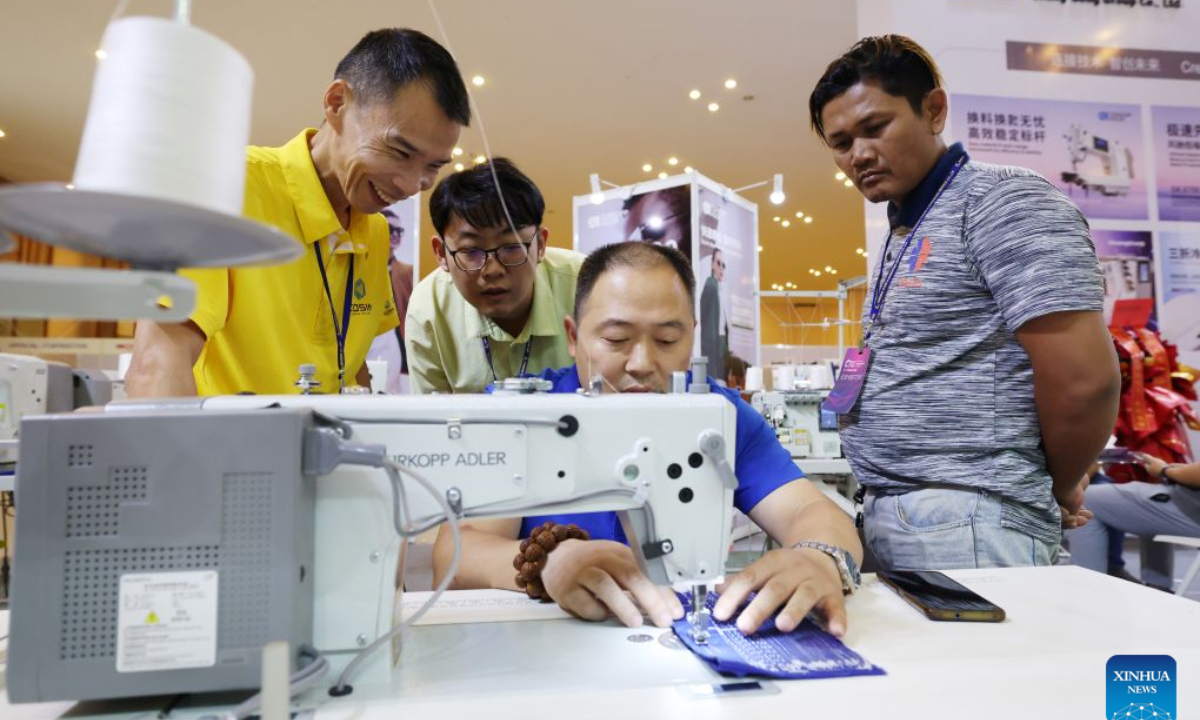
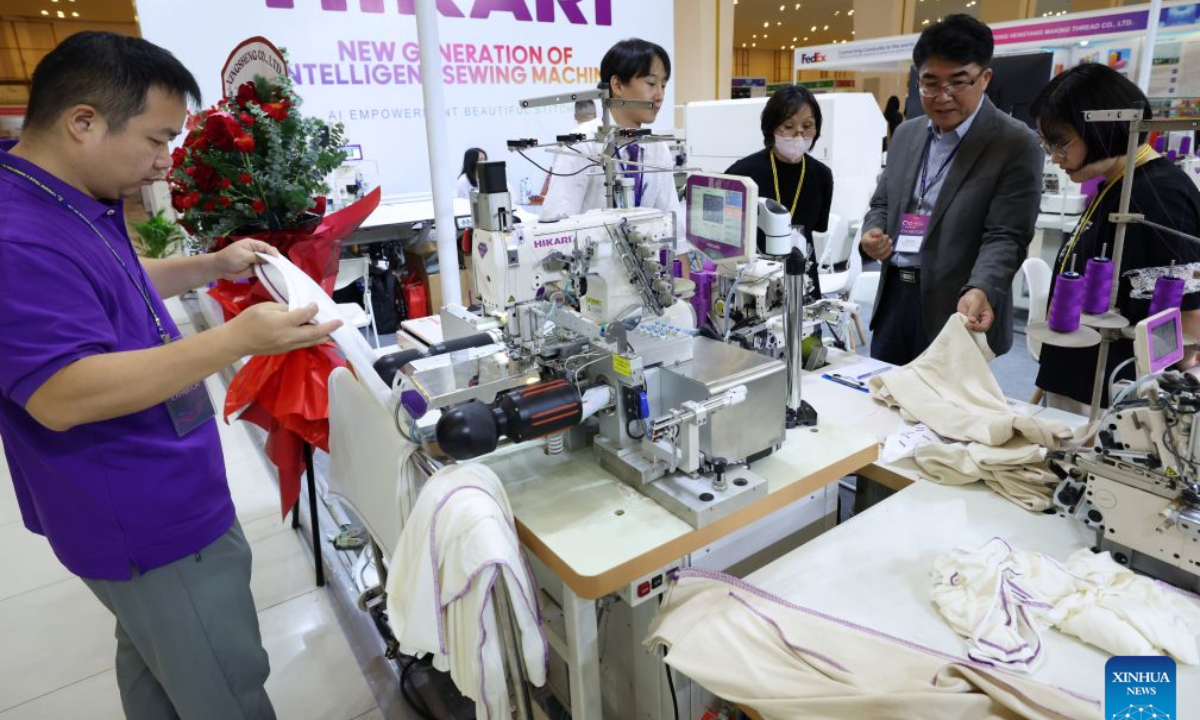
The four-day expo, which runs from Thursday to Sunday, features more than 200 local and international exhibitors.
A significant portion of these participants comprises Chinese companies across four core sectors: machinery and automation, textiles and garments, plastics and rubber, and printing and packaging.
Organized by Yorkers Trade & Marketing Service Co., Ltd. in collaboration with the Ministry of Industry, Science, Technology & Innovation, the expo provided a platform to showcase emerging industrial technologies, foster business connections and support the modernization of Cambodia's manufacturing sector.
According to official ministry data, Cambodia had 3,357 operational factories as of July 2026. These facilities employ over 1.35 million workers, more than 70 percent of whom are women.
Total factory investment in the kingdom reached approximately 28 billion U.S. dollars, a 29 percent increase compared to the same period in 2025. Additionally, industrial production during the first half of 2026 was valued at over 9.8 billion dollars, including roughly 7.3 billion dollars in goods manufactured for export.
Cambodian Minister of Industry, Science, Technology and Innovation Hem Vanndy urged Cambodian enterprises to embrace advanced technologies to boost productivity, improve quality, and sharpen their competitive edge.
"Artificial intelligence, production-line automation, robotics, digital technologies and smart manufacturing are increasingly determining the competitiveness of nations," he said during the expo's opening ceremony on Thursday.
"Cambodia cannot remain outside this transformation," Vanndy said. "We must embrace new technologies to increase productivity, reduce costs, improve product quality and strengthen the competitiveness of our enterprises."
Chim Vinly, the expo's organizing staff member, said the exhibition plays a vital role in introducing innovative manufacturing technologies to Cambodia's garment sector, as attendees can explore a diverse range of advanced machinery designed to elevate production standards.
"Most exhibitors represent the textile and garment industries, with the majority being local and Chinese companies," he told Xinhua on Saturday.
"These advanced manufacturing tools have boosted productivity and modernized local production chains. In particular, they make work faster and more efficient," he added.
Vinly said the annual event plays a vital role in further expanding bilateral trade between China and Cambodia.
"Chinese investment is crucial to boosting Cambodia's economic growth and generating job opportunities for the local workforce," he said.
Bo Seyma, a mechanic at Kosin Sewing Machine Co., Ltd., which supplies Cambodian factories with equipment from the Shanghai-based Shang Gong Group, said the expo is vital for showcasing cutting-edge machinery to the local garment industry.
He said the Kosin company is promoting sewing, embroidery, button, and backstitching machines, along with other equipment, to factories in Cambodia.
"These industrial machines are in high demand, with numerous factories placing purchase orders with our company," he told Xinhua on Saturday.
Seyma said these advanced machines are high-quality and built to last.
"These machines accelerate production efficiency while effortlessly meeting customer demands," he said.
Thong Mengdavid, deputy director at the China-ASEAN Studies Center of the Cambodia University of Technology and Science, said that Cambodia, a country heavily dependent on textiles and garments, has seen its cooperation with China evolve from providing raw materials like fabrics and finished consumer goods toward technological cross-pollination.
This allows local Cambodian plant managers and entrepreneurs to evaluate high-grade machinery directly, he added.
"Integrating China's technology, machinery, and tools into Cambodian factories will address several challenges in the local economy, such as enhancing output per hour, reducing material waste caused by human error, and fostering skill development among the workforce," Mengdavid said.
。
Current article:http://1j8.shuicengchongmingnouhuawang.bond/news/20260826_101222.html
Published on:00:07:54


